
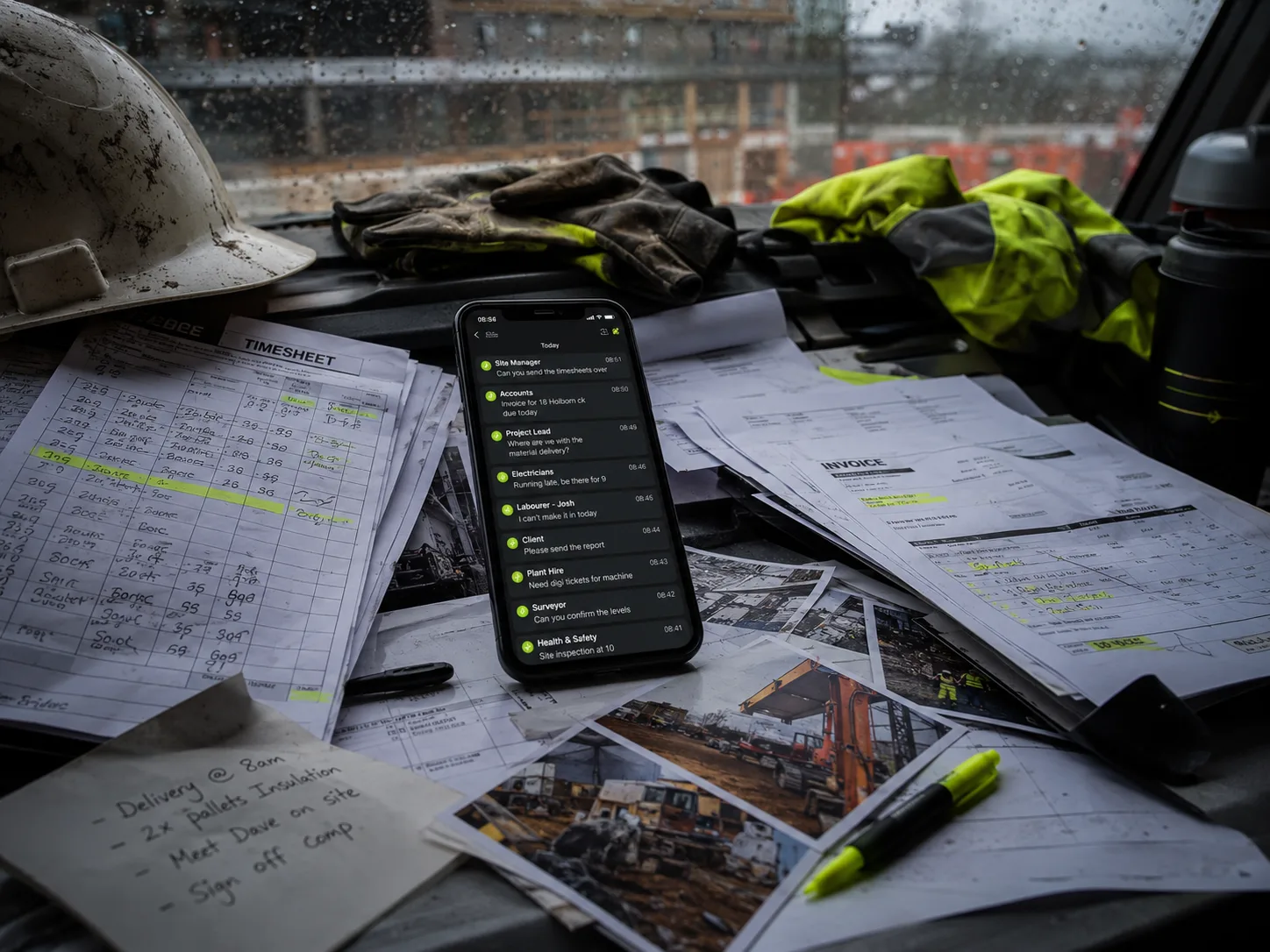
Ask most trades what they do for a living and they will say they build, plumb, wire or fit. Ask what they actually spend their evenings doing and the honest answer is admin. Construction admin is the hidden tax on every job: the timesheets, the invoices, the chasing, the paperwork. This is where those hours really go, what they cost, and how to cut them down.
The admin tax nobody prices for
When you price a job, you cost the labour and the materials. You do not cost the two hours on Friday night chasing timesheets, the Sunday morning retyping invoices, or the half-days lost hunting for a signed document a client suddenly wants. That work is real, it is unpaid, and for a lot of small firms it adds up to a full working day a week that never appears on any invoice.
It is worse than just lost time. Admin done tired and late is admin done wrong, and mistakes in construction are expensive: a CIS deduction miscalculated, an invoice sent for the wrong amount, a certificate that cannot be found when it matters.
Where the hours actually go
The admin load on a trade business tends to pool in a few familiar places.
Timesheets and pay
Chasing crew for their hours, working out days versus price work, calculating CIS, and getting everyone paid. Done through texts and paper, this eats an evening most weeks. Done properly, as we cover in tracking hours on site, it can be minutes.
Invoices and CIS
Retyping figures into invoices, splitting labour and materials, working out the deduction, and keeping every statement for the tax return. Get the CIS invoice wrong and you either lose money or hold up your own payment.
Chasing and finding things
The single biggest time sink is looking for information that exists but is not to hand: which drawing is current, who signed the RAMS, where the delivery note went, what was agreed on hours. When the record is spread across paper, chats and someone's memory, every question becomes a search.
The cost of getting it wrong
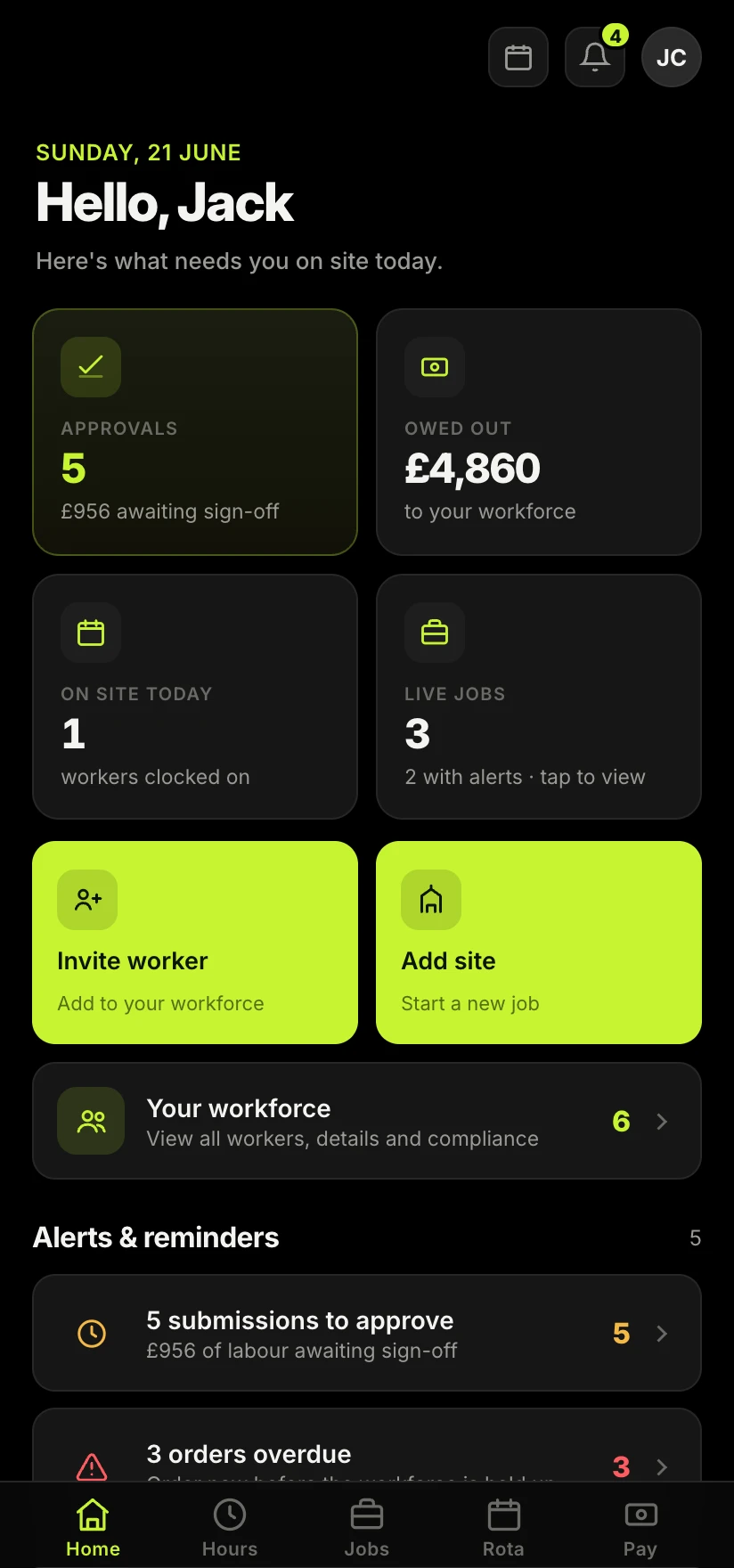
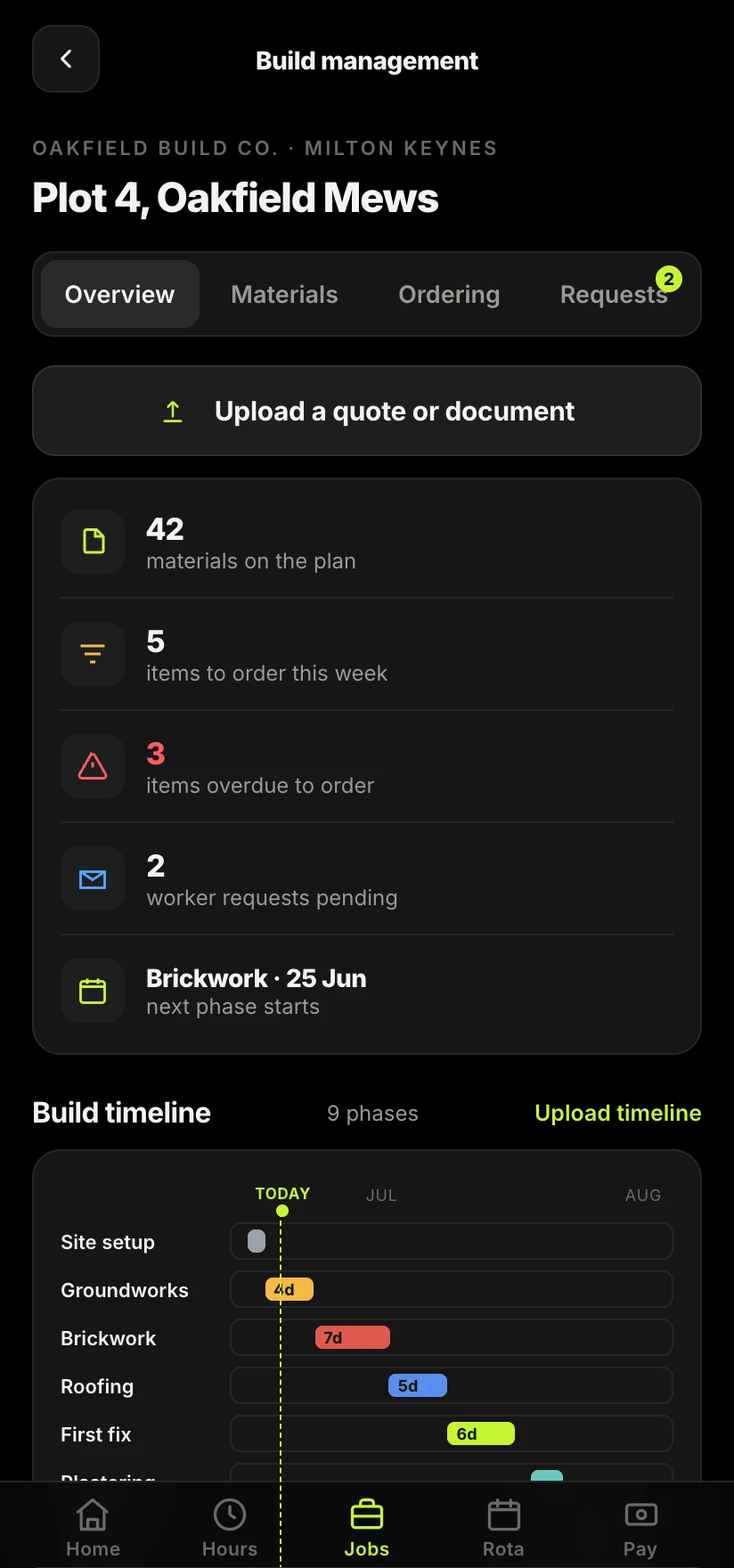
Beyond the hours, disorganised admin carries real financial risk. Materials ordered twice because a request got lost in a chat. Overspend nobody spots until the job is finished. A dispute over hours that could have been settled in seconds if it had been approved at the time. A missing certificate that delays a payment or a sign-off. None of these are dramatic on their own, but together they are the difference between a job that made money and one that did not.
You did not start a trade business to spend your evenings retyping numbers. That time is the most expensive thing you own.

One place beats ten apps
The usual response to admin is to bolt on tools: one app for invoices, a spreadsheet for hours, a folder for documents, a group chat for everything else. But every extra place is another thing to keep in sync, and the gaps between them are exactly where time and money leak out.
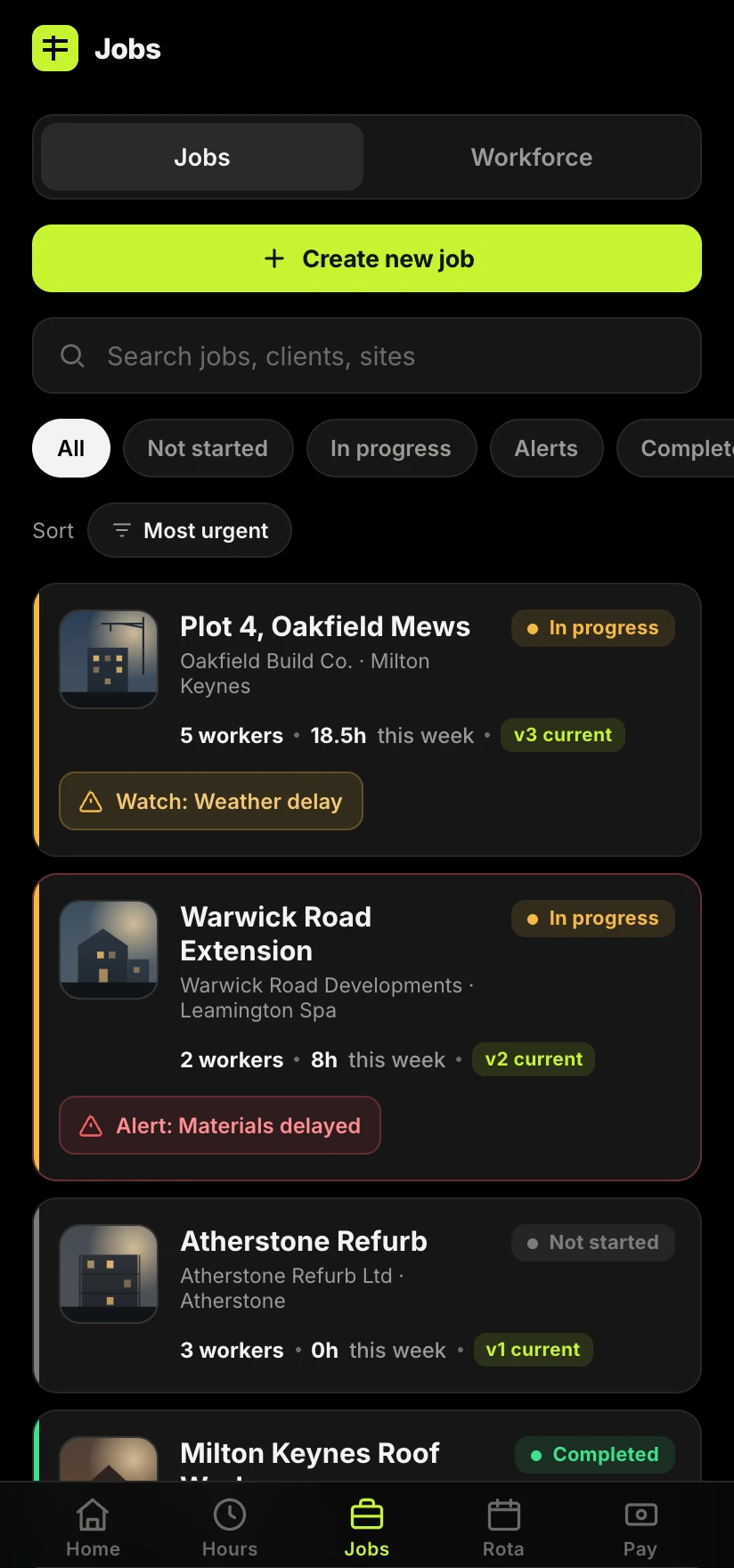
The alternative is to keep the whole job in one place: the people, the hours, the invoices, the CIS, the materials and the site records, all tied back to the live job so the record builds as the work happens. When your timesheet feeds your pay, and your pay feeds your invoice, and your documents sit on the job they belong to, the admin does not pile up because it never gets separated from the work in the first place.
How to cut your admin down
You do not need to fix everything at once. A few changes make an outsized difference:
- Capture once. Log hours, materials and documents against the job at the time, so nothing gets retyped later.
- Approve as you go. Settle hours and requests while the week is fresh, not a fortnight later.
- Keep it on the job. Attach every record to the site it belongs to, so nothing has to be reassembled.
- Cut the number of places. The fewer apps, chats and spreadsheets your information lives in, the less time you lose stitching them together.
Do that and the Friday-night admin session shrinks from a chore into a check. That is the whole idea behind Sitewise: not more software, but less admin, so the job runs itself on the record and you get your evenings back.
Take the admin off your hands.
Sitewise keeps hours, invoices, CIS, materials and site records on one live job, so the admin never piles up for the weekend. Less paperwork, and more of your life back.
Join the Sitewise waitlistFree to join. Be first in when early access opens.
Frequently asked questions