
Ask ten tradespeople what they charge and you will get ten different answers, half of them delivered with a shrug. Day rates for UK trades are one of the most searched, least talked about numbers in the industry, because most people set theirs by copying whoever trained them and nudging it up a bit when the diary fills. This guide lays out where day rates sit across the trades in 2026, what actually moves a rate up or down, and how to set a number that covers your costs and still leaves you a profit.
A day rate looks simple. It is anything but. The figure you put on a day of your time has to carry your wages, your tools, the van, insurance, downtime, holidays and the hours you lose to quoting and invoicing, and it still has to leave something over at the end of the year. Get it right and a steady diary quietly builds a real business. Get it wrong and you can work flat out for twelve months and still wonder where the money went.
What a day rate actually covers
A day rate is a flat fee for a day of your labour, usually based on an eight hour day. Materials, plant hire, skips and waste are normally charged on top rather than swallowed inside the rate. It is the default pricing model for work that cannot be pinned down before you start: repairs, alterations, snagging, and anything where you will not know the full scope until the first wall or floor is open.
The important thing about day work is where the risk sits. On a day rate, if the job runs longer than expected, the clock keeps running and the client carries that cost. That is the opposite of price work, where you name one fixed figure for the whole job and the risk of it overrunning lands on you. Most of the confidence that separates a comfortable trade business from a stressed one comes down to knowing which of those two you should be using, and when. We come back to that further down.
Day rates for UK trades in 2026, by trade
Before any numbers, one warning worth reading twice. Treat everything below as a broad snapshot of what the market is reporting in 2026, not a price list to copy. Real rates swing widely with region, experience, how booked up you are and how specialist the work is. A time served tradesperson in central London and a newly qualified one in a quiet corner of Wales can both be charging a perfectly fair rate and be a hundred pounds a day or more apart. These are ballparks to orient yourself, nothing more.
- General builders and skilled tradespeople sit broadly around £150 to £250 a day, rising to roughly £200 to £320 in London and the South East.
- Labourers typically land around £100 to £150 a day.
- A bricklayer day rate commonly falls around £200 to £300 a day per bricklayer, tools included, with materials and the mixer on top.
- A plasterer day rate tends to run around £200 to £350 a day, with many settling near £250 to £280 outside London and more in the capital.
- Carpenters and joiners broadly sit around £150 to £250 a day, higher for bespoke or fitted work.
- An electrician day rate for a qualified spark often runs around £250 to £400 a day, climbing further for testing, certification and specialist installs.
- A plumber day rate is broadly similar at around £250 to £400 a day, with Gas Safe registered engineers who take on boiler and heating work sitting at the top of the range.
- Groundworkers tend to track the skilled labour band and climb from there once plant, tickets and machine time come into it.
Those are the headline bands, but the figure that matters is yours, not the trade average. If you want to see how the app is built around the way a specific trade works, we have dedicated pages for electricians, plumbers, bricklayers and plasterers, among the others.

What actually drives your rate
Four things do most of the work in setting where you land inside those ranges, and understanding them is how you justify charging more than the person down the road.
The first is skill and qualification. A newly qualified tradesperson and a time served one with twenty years of finish quality behind them are not selling the same day, and should not be charging the same for it. Tickets and registrations matter here too. A Gas Safe plumber, an electrician who can issue an EICR, a groundworker with the right plant qualifications: each of those carries a premium because the client cannot get the work signed off without them.
The second is region. This is the biggest single swing in the market. Rates in London and the South East typically run twenty to thirty percent above the UK average, the commuter belt a little less, while parts of the North, Wales and Scotland often sit five to fifteen percent below it. The work is broadly the same. The local cost of living and the weight of demand are not.
The third is overheads, and it is the one most trades underweight. Your rate is not just your wage for the day. It has to carry the van, fuel, insurance, tools and their replacement, your phone, your accountant, software, training and the unpaid hours you spend quoting and chasing. Ignore those and you have set a rate that pays you a wage but slowly starves the business that pays the wage.
The fourth is plain demand. When your diary is full three months out, your rate is too low. When you are quoting into silence, it is either too high for your area or your sales and reputation need work before the number does. A rate is a living figure, not something you set once and never revisit.
How to set a rate that covers your costs and leaves a margin
There is a simple method underneath all of this, and it beats copying a mate every time. It comes down to three honest numbers: what you need to take home, what the business actually costs to run, and how many days you genuinely bill in a year.
That last number is where most people fool themselves. There are around 260 weekdays in a year, but you will never bill all of them. Holidays, illness, bad weather, bank holidays, quoting, collecting materials and the dead days between jobs all come out of the total. Plenty of sole traders bill 200 days or fewer once you count honestly. Take the money you need the business to earn, which is your take-home target plus every running cost, and divide it by your real billable days. That gives you the floor your rate cannot drop below without you losing money.
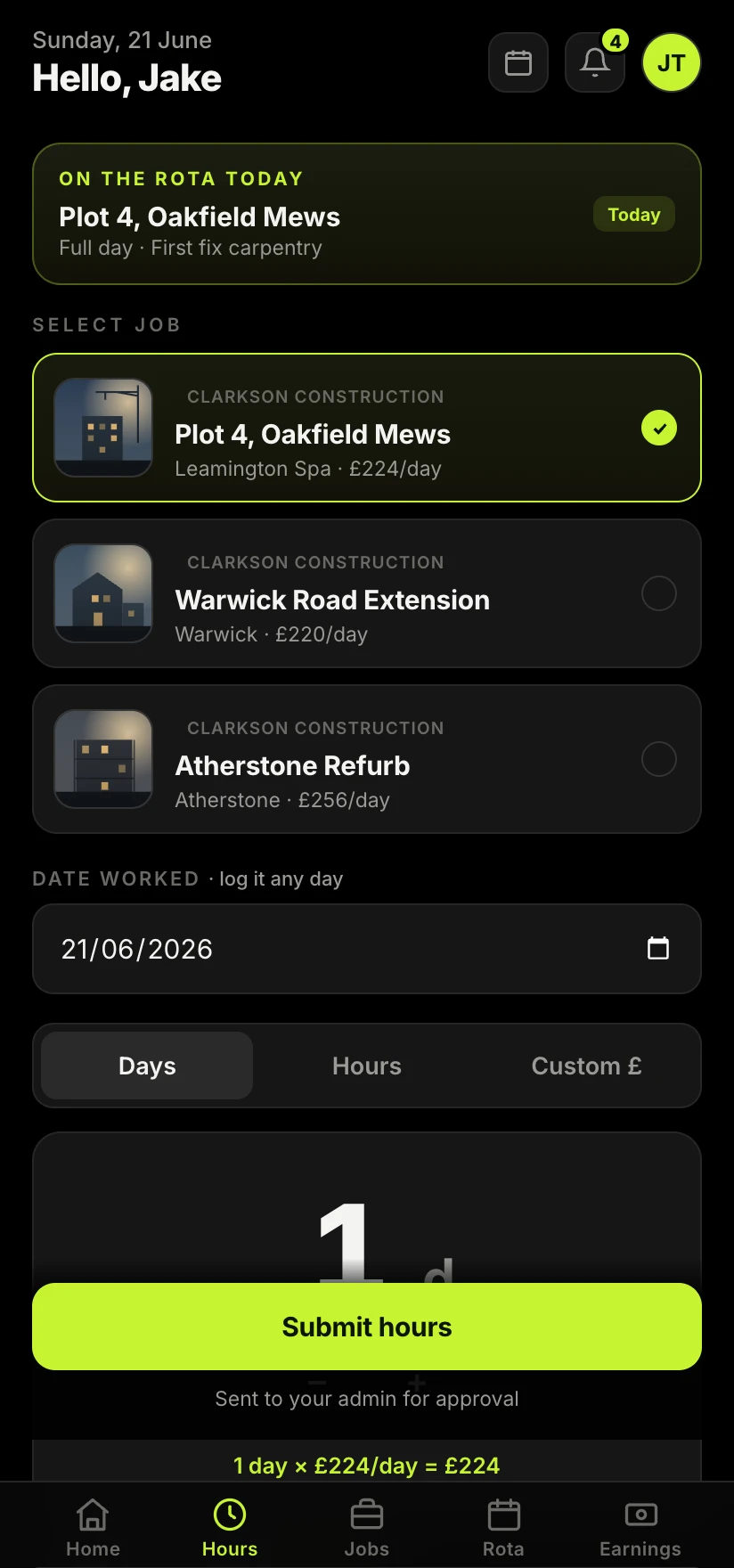
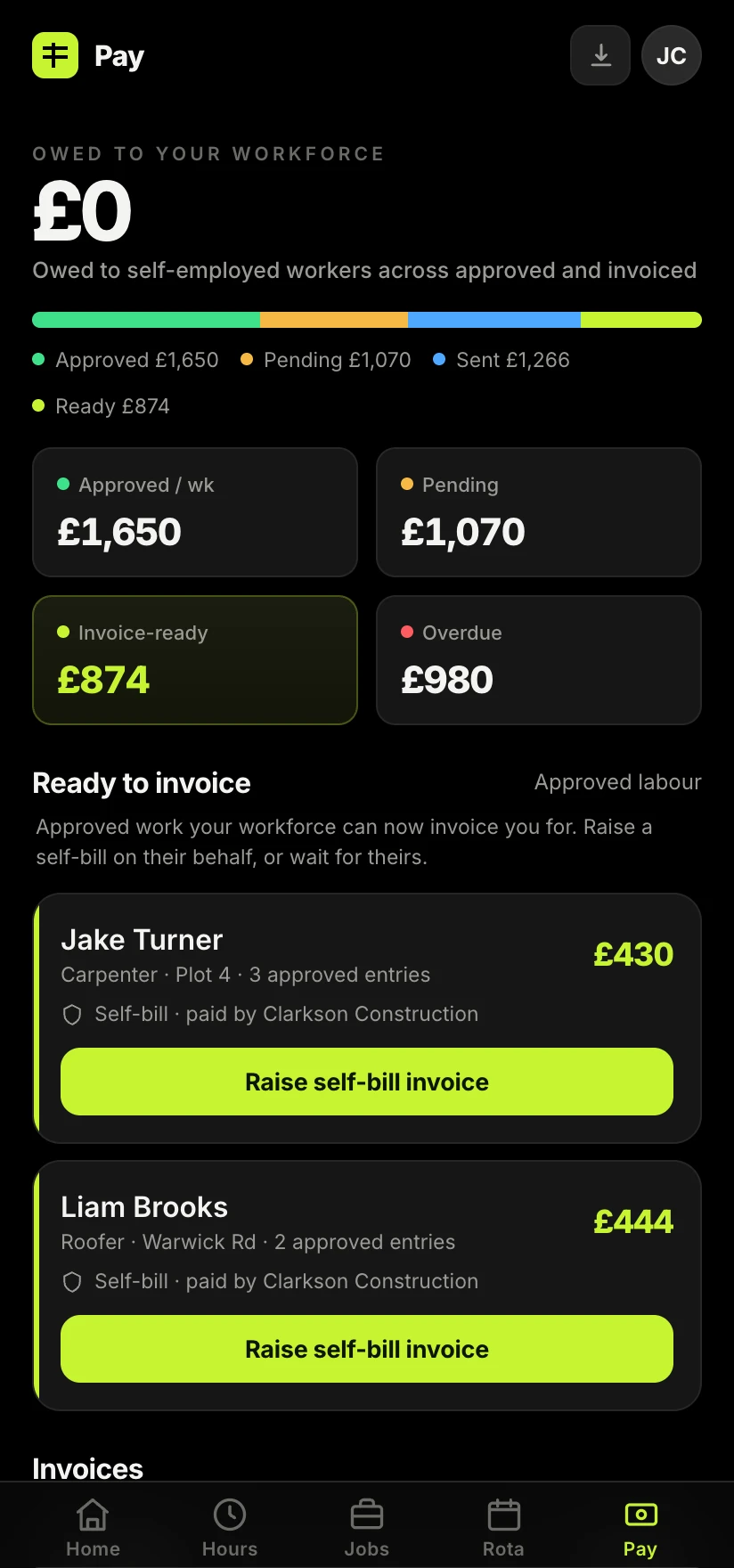
Then add a margin on top of the floor, because breaking even is not a business. Our free day rate calculator runs exactly this sum for you: put in your take-home target, your annual costs and the days you realistically bill, and it tells you the rate you need to charge, then lets you price a job from it in seconds. The only way to trust the billable-days figure is to record it, which is where tracking hours on a construction site stops being admin and starts being the thing your pricing is built on.
Two outside numbers can move your rate whether you like it or not. If you take on staff, the rate has to cover their pay, which from April 2026 cannot fall below the National Minimum Wage of £12.71 an hour for workers aged 21 and over. And once your taxable turnover passes the VAT registration threshold, currently £90,000 across any rolling twelve months, you have to add VAT, which changes what a day of your time looks like to a client and is worth planning for before it arrives rather than after.
When day work beats price work
Day work is the honest choice when you genuinely cannot scope the job in advance. Old buildings, hidden pipework, repairs where you will not know the damage until you open it up, and clients who are still making up their minds all belong on a day rate, because a fixed price for an unknown is just a guess you will end up eating. On day work the overrun risk sits with the client, which is fair when nobody can see the full picture yet.
Price work is better when you can describe exactly what needs doing, what materials go in and what the finished result looks like. A fitted kitchen, a defined run of brickwork, a rewire of a known property: those can and usually should be fixed priced. The risk shifts to you, but so does the reward, because you keep the upside when you work efficiently. Most clients prefer a fixed price for the certainty, which is precisely why the ability to price a job confidently is worth real money. Our guide on how to price a building job walks through that side in detail.
In practice most trades run both. Day work for the unknowns and the extras, price work for the clearly defined scope, often on the same project. Subcontractors are a case of their own, frequently taking a day rate or a price set by the main contractor rather than one they set themselves. If that is you, our page for subcontractors covers how the app keeps your own record of days worked and agreed, so you are never arguing from memory at the end of the month.
Standing behind your number
The hardest part of a day rate is not working it out. It is saying it out loud to a client without flinching, and holding it when they wince. That nerve comes from one place: knowing the number is right, because you built it from your real costs and your real billable days rather than plucking it from the air.
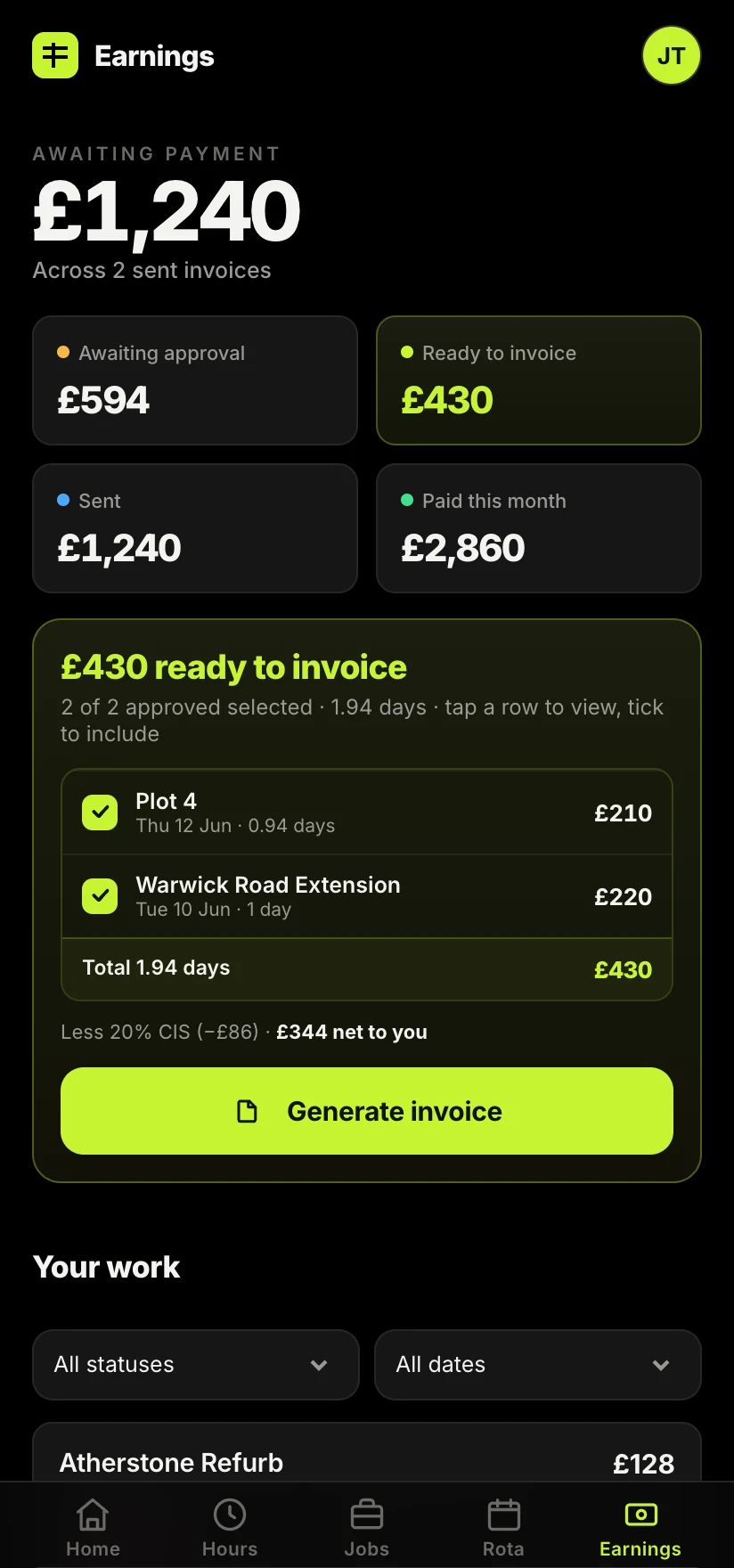
It also comes from being able to show your work. When you can point to the hours logged, the days on site and the job in front of you, the rate stops being a figure you are defending and becomes a record you are simply reading out. Clients rarely push back on a rate that is clearly earned and clearly evidenced. They push back on the ones that sound made up, and a surprising number of fair rates sound made up purely because the trade behind them cannot back the number with anything. Set your rate properly, keep the records clean, and the conversation gets a great deal shorter.
Take the admin off your hands.
Sitewise is built to track your hours and costs against every job, so you know your real billable days and can set a day rate that genuinely covers them. Try the free day rate calculator while you wait, and join the waitlist for early access.
Join the Sitewise waitlistFree to join. Be first in when early access opens.
Frequently asked questions