Pricing is where a trade business is quietly won or lost. Quote too high and you do not get the work. Quote too low and you win the job but lose the money, and you find out weeks later when it is too late. This is a plain guide to how to price a building job properly, so your quotes win work and still make a margin.
Most underquoting is not one big error. It is a handful of small costs left out, repeated across every job, until a business that looks busy is barely breaking even. The fix is a method you use every time.
Start with labour, honestly
Labour is usually the biggest cost and the easiest to underestimate. Work out how many days the job really takes, for how many people, and cost it at a rate that covers not just wages but the true cost of employing or subcontracting. Be honest about pace. The job in your head always goes quicker than the job on site, where weather, deliveries and access slow things down.
If you run price work or day rates, cost the way you actually pay. Our guide on tracking hours on site covers keeping the real numbers, which is what you price the next job from.
Cost materials from a real list
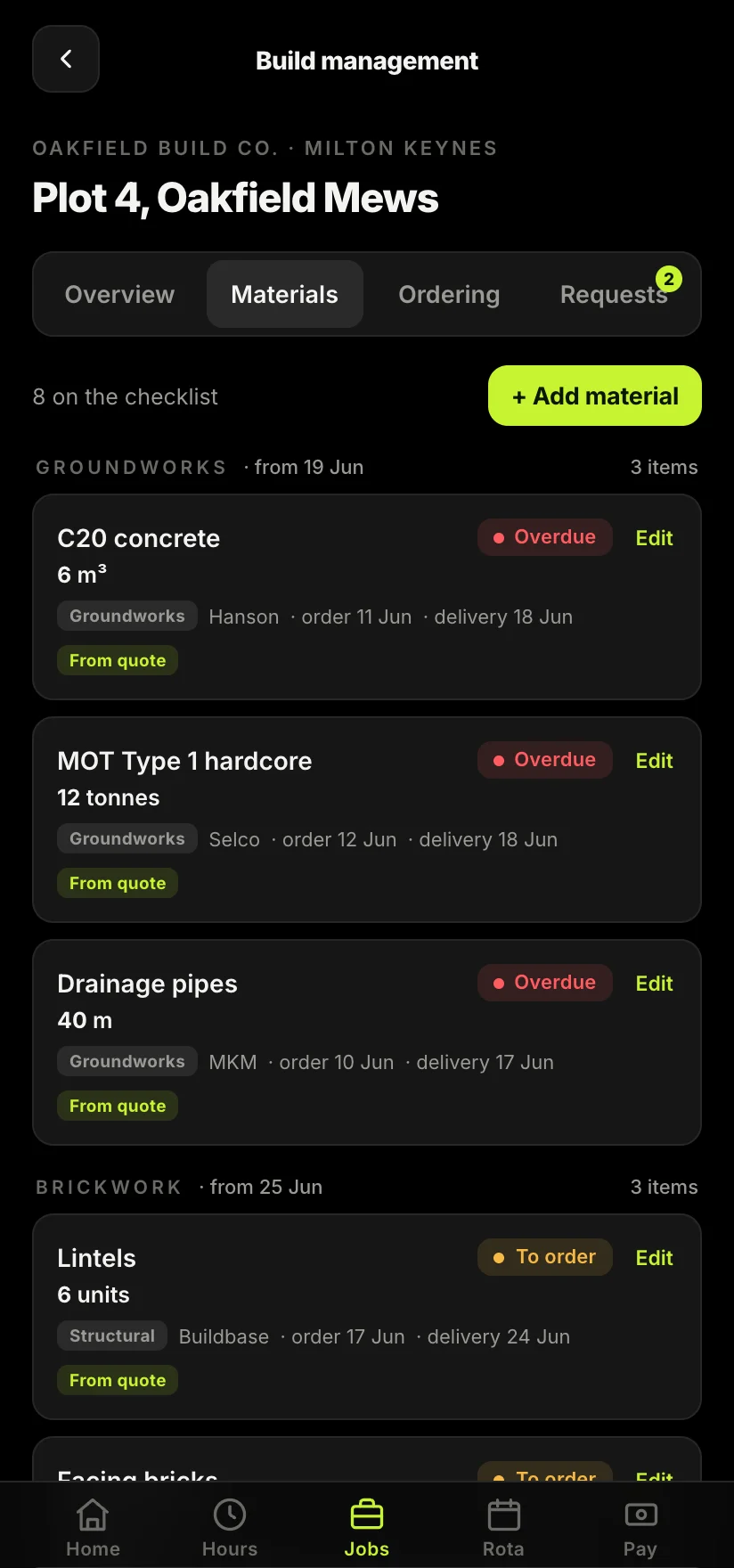
Break the job into a materials list and price it from current supplier prices, not memory. Add a sensible allowance for waste and offcuts, because you never use exactly what you measured. Include the small consumables that add up: fixings, sealant, blades, hire. Missing a few hundred pounds of materials on every job is a common and expensive habit. Once you are on site, keeping those materials tracked against the job tells you whether your pricing was right.
Do not forget the prelims
Prelims are the costs of running the job that are not labour or materials on the finished work: access and scaffold, welfare, skips and waste removal, plant and tool hire, deliveries, and site setup. On bigger jobs these are significant, and on smaller jobs they get forgotten entirely. List them every time.
The costs that sink a quote are almost never the obvious ones. They are the skip, the scaffold, the waste, and the two days of admin nobody priced for.
Add overheads and the cost of admin
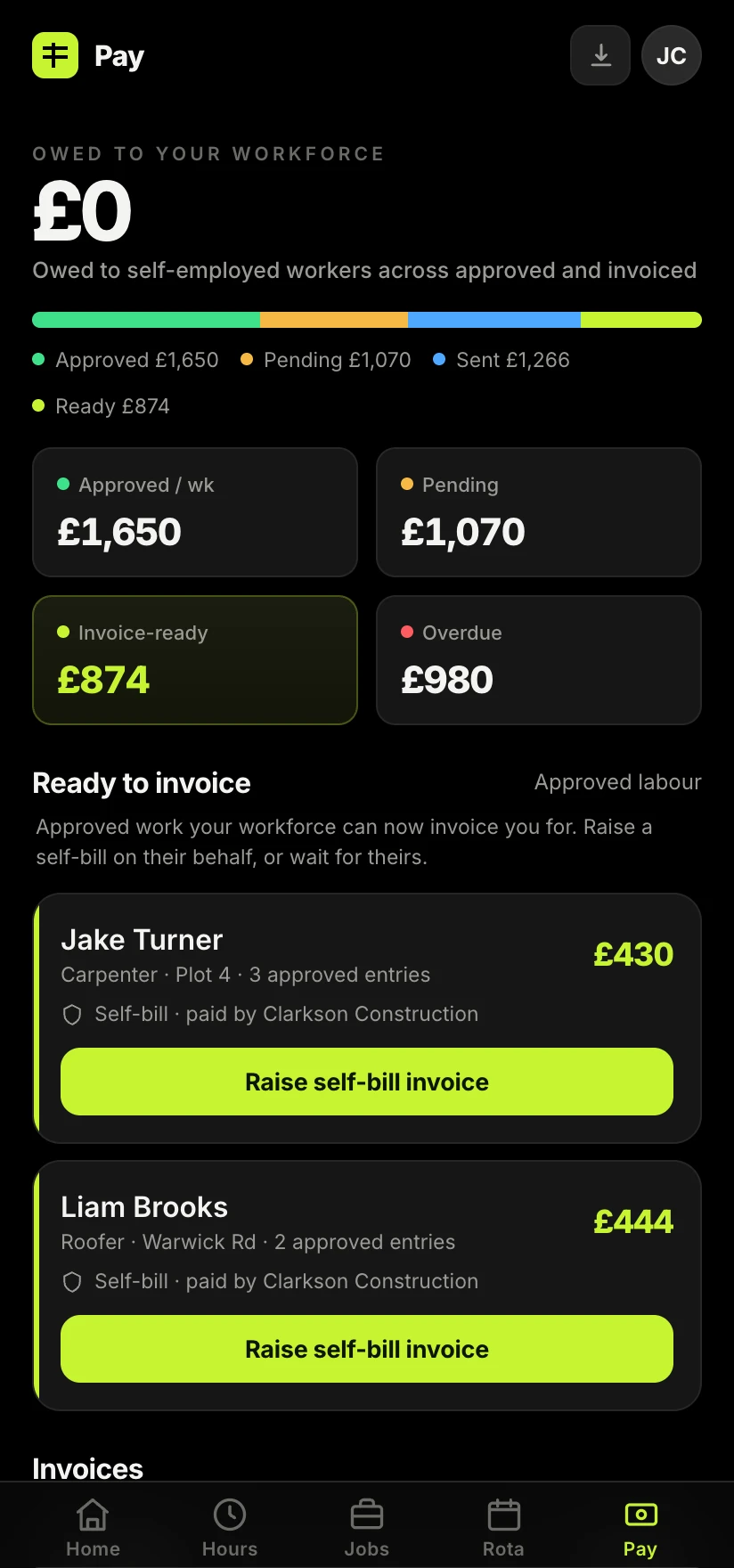
Your quote has to carry a share of the costs that keep the business running even when you are not on the tools: insurance, vehicle, phone, accountant, software, and the hours spent quoting, invoicing and chasing. That admin is real work, and if you do not build it into your prices, you are doing it for free. Our piece on the real cost of construction admin shows just how much time it quietly eats.
Then add your margin
Everything so far is cost. Margin is what is left for the business to grow, to cover the jobs that go wrong, and to pay you properly for the risk of running the firm. Decide your margin deliberately and add it on top of your full costs. A common mistake is to treat a small markup on materials as the profit, while the labour and overheads quietly eat it. Margin sits on top of the true, full cost of the job.
Price the next job from the last one
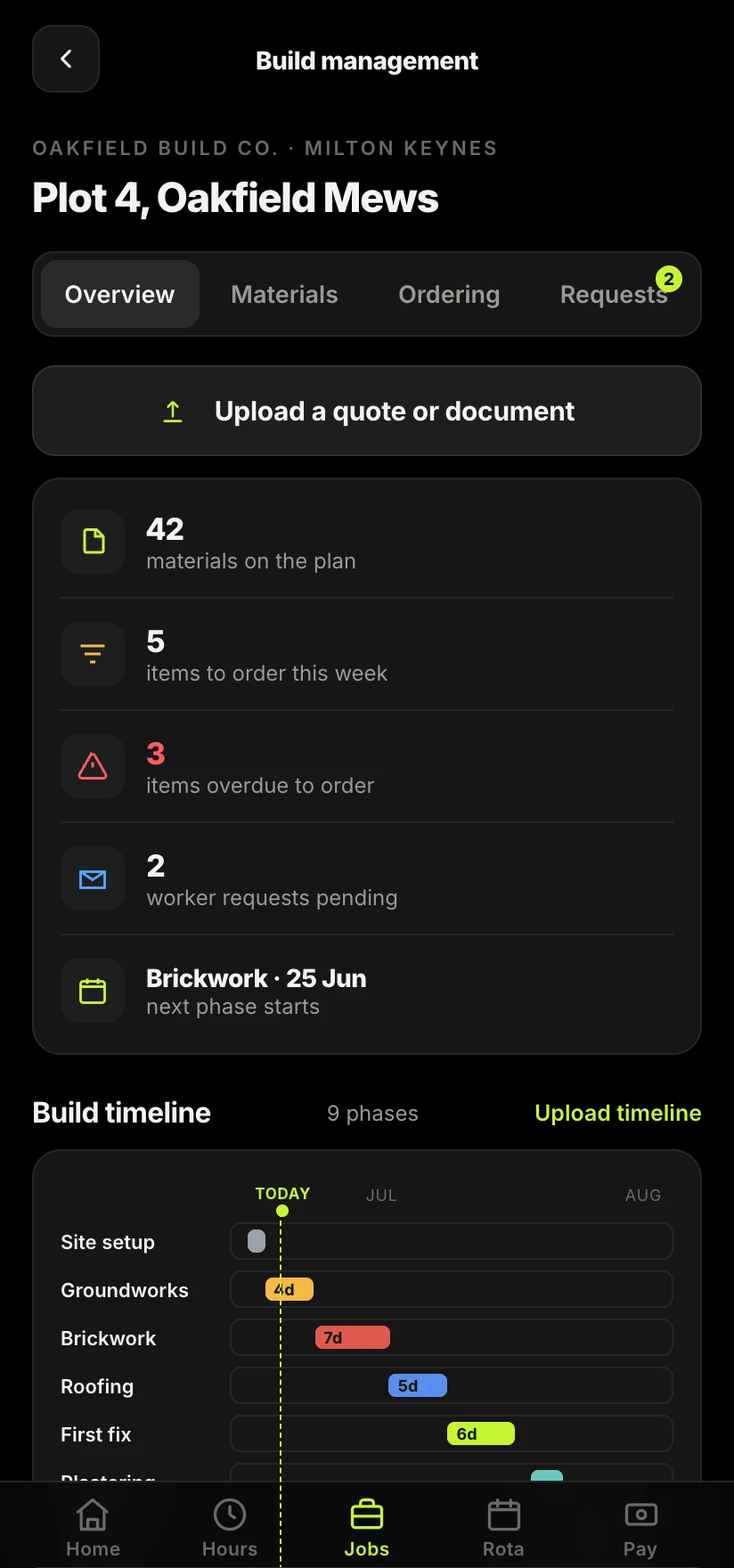
The single biggest improvement you can make to pricing is to compare what you quoted with what the job actually cost. If you never track the real labour and materials against the price, every quote is a fresh guess. If you do, your pricing gets sharper with every job, because you are working from your own numbers.
That is exactly what Sitewise is built to give you: labour and materials tracked against the quote, live, so you can see whether a job is making money while it is still running, and price the next one from real figures instead of hope. Good pricing is not a knack. It is a method, plus honest numbers to feed it.
Take the admin off your hands.
Sitewise tracks labour and materials against the price you quoted, live, so you learn what a job really costs and price the next one from real numbers.
Join the Sitewise waitlistFree to join. Be first in when early access opens.
Frequently asked questions