RAMS is one of those site acronyms everyone uses and few people fully explain. It stands for Risk Assessment and Method Statement, two related but different documents that together show a job can be done safely. This guide explains RAMS, method statements and risk assessments in plain terms, when you need them, and what belongs in each.
What does RAMS stand for?
RAMS means Risk Assessment and Method Statement. It is not a single document but a pairing: the risk assessment identifies what could go wrong and how you will control it, and the method statement sets out the step-by-step way the work will actually be carried out safely. Most contractors ask for them together, which is why they get bundled into one word.
Risk assessment vs method statement
The two are easy to mix up, so here is the difference.
The risk assessment
A risk assessment looks at a task and asks: what are the hazards, who could be harmed, and what will we do to reduce the risk? It lists each significant hazard (working at height, dust, manual handling, electricity, and so on), rates the risk, and records the control measures that bring it down to an acceptable level. The Health and Safety Executive sets out the basic approach in its guidance on risk assessment.
The method statement
A method statement is the how. It describes, in order, the safe way to carry out the work: the sequence of tasks, the equipment and PPE used, who is responsible for what, and the controls from the risk assessment put into practice. If a risk assessment says "risk of falls when working at height," the method statement says exactly how the scaffold or MEWP will be used to prevent them. Start from our free method statement template so you do not miss a section.
Risk assessment: what could go wrong and how we control it. Method statement: the safe steps we will actually follow.
When do you need RAMS?
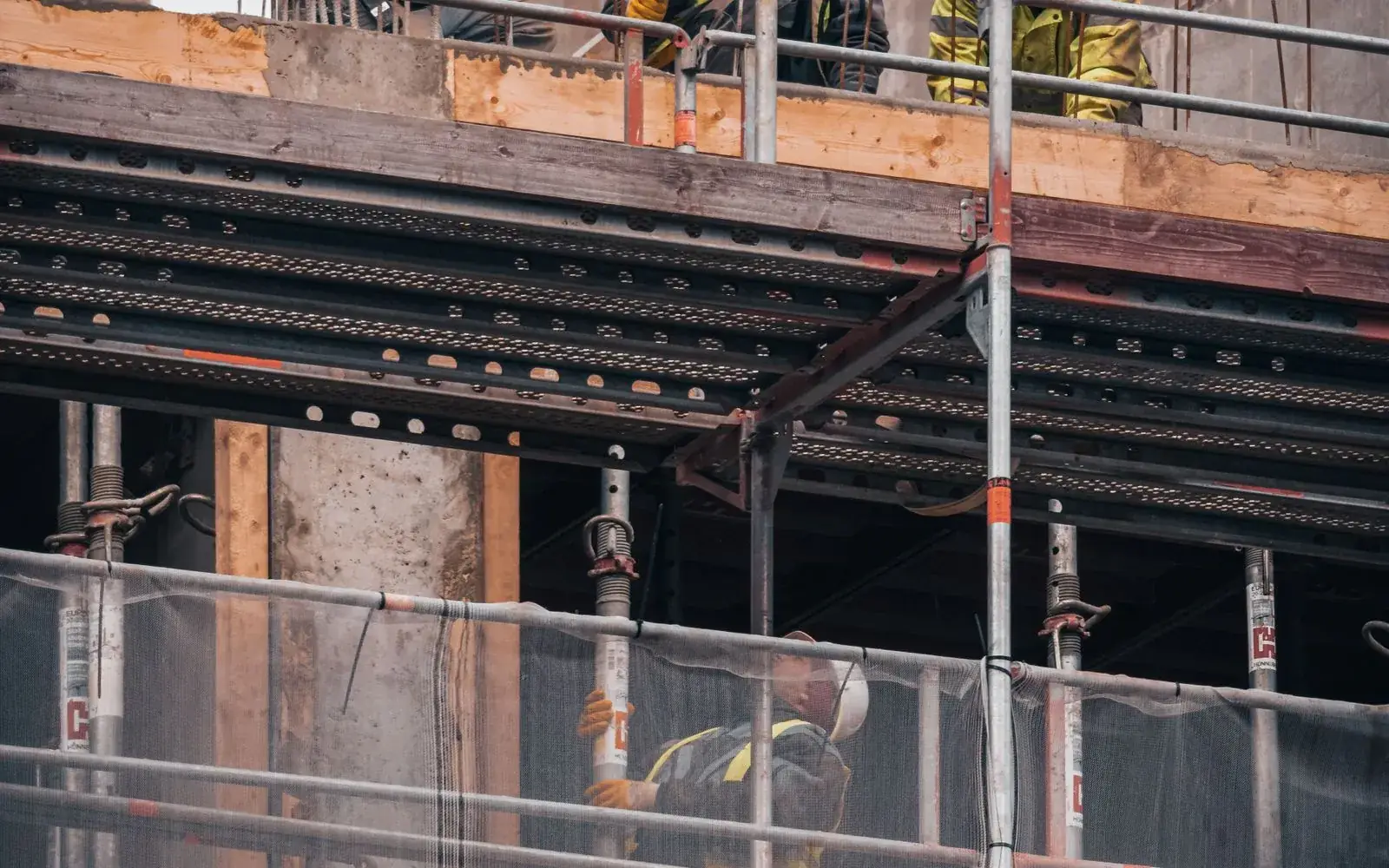
You will be asked for RAMS on most commercial and larger domestic sites, and for any task with meaningful risk: working at height, excavations, hot works, demolition, confined spaces, heavy lifting, and work involving hazardous substances. Principal contractors routinely require RAMS from every subcontractor before they set foot on site, partly for safety and partly because it is expected under the Construction (Design and Management) Regulations 2015 (CDM).
Even on smaller jobs, a written risk assessment is good practice and can be the thing that protects you if something goes wrong. "We talked about it" is a much weaker position than a signed document.
What goes into good RAMS
Strong RAMS are specific to the actual job, not a generic template with the site name swapped in. A useful set covers:
- the site, the client and the specific task;
- the people doing the work and who is supervising;
- the hazards identified and the risk rating for each;
- the control measures and the PPE required;
- the step-by-step method for carrying out the work;
- emergency arrangements and first aid;
- sign-off from the people who will actually do the work.
That last point matters more than it looks. RAMS only work if the crew has read them and signed to say so. A document sitting in the site office that nobody has looked at protects nobody.
Keeping RAMS on site and up to date
RAMS are not a one-and-done. If the job changes, the weather turns, or a new hazard appears, they should be reviewed and updated. And they need to be available on site, not on a laptop back at the office. This is exactly where paper falls down: the current version is in the van, the signed copies are somewhere, and nobody is quite sure which revision is live.
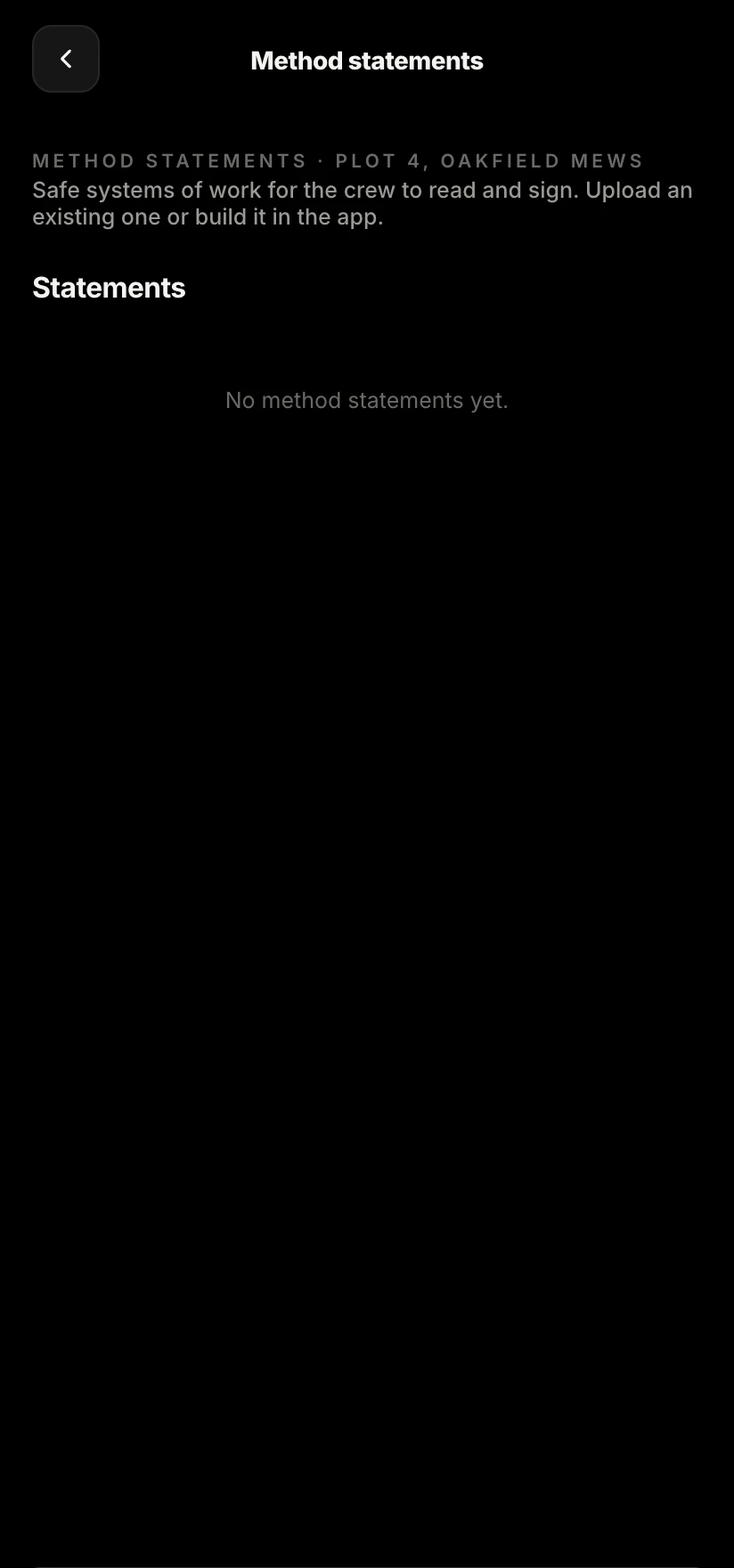
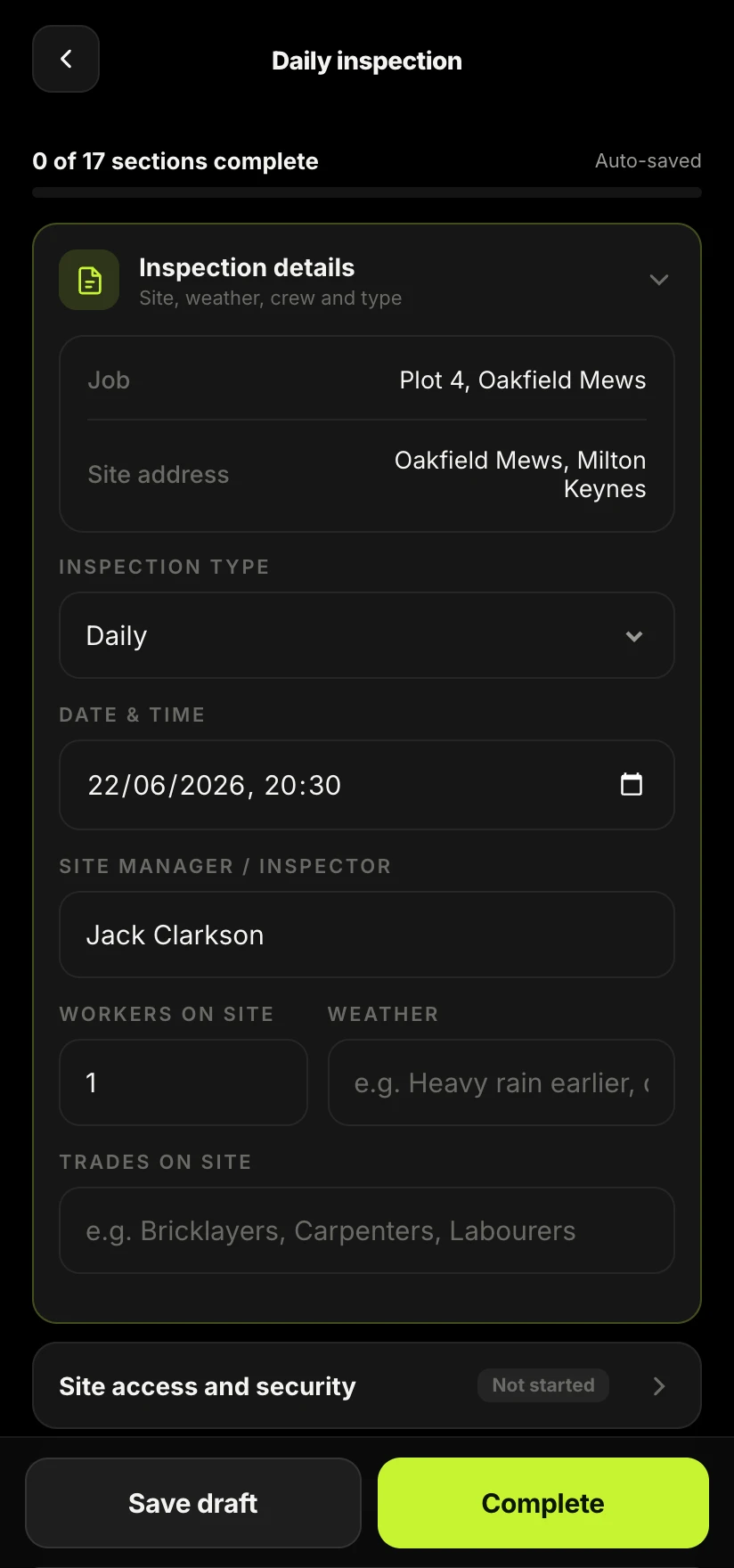
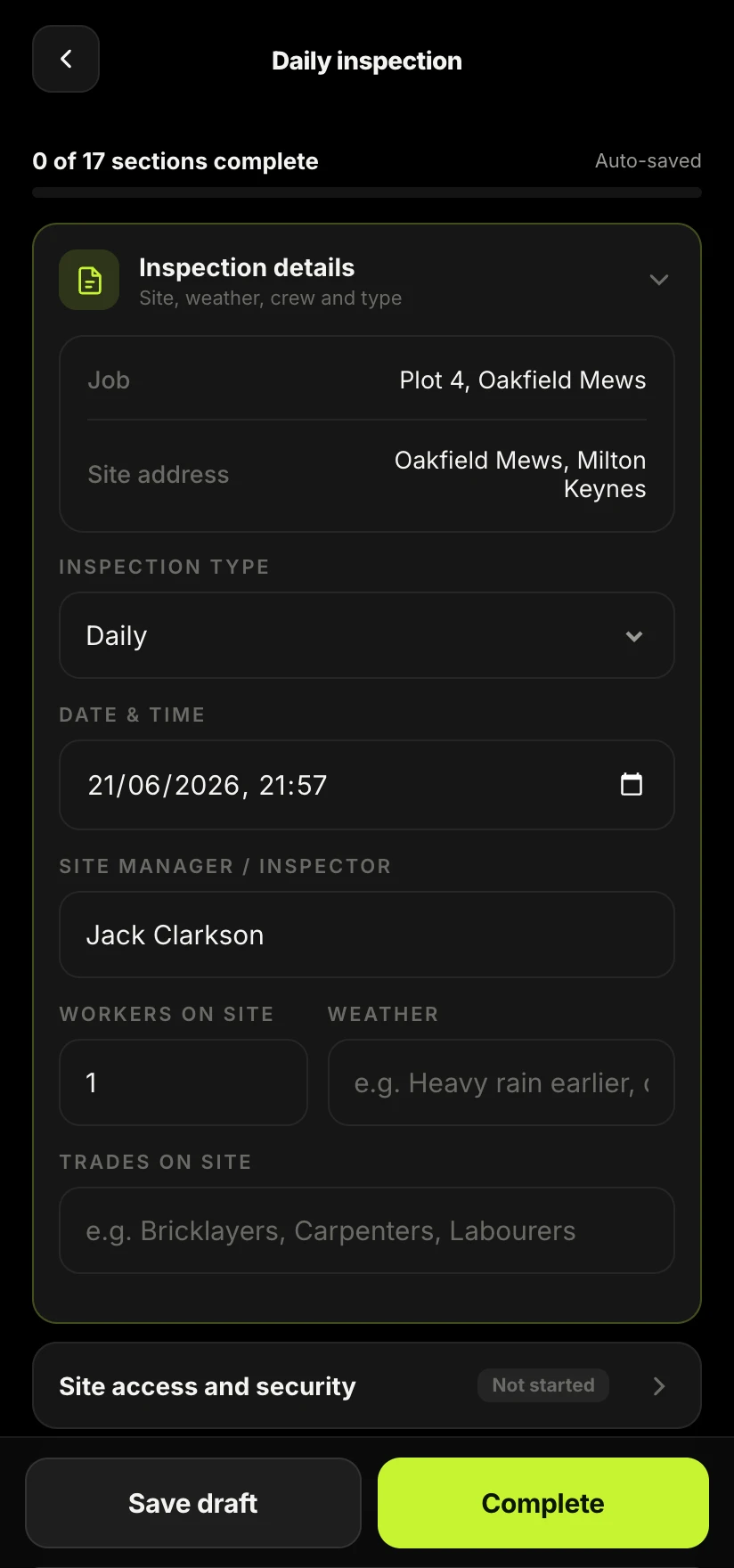
Keeping RAMS, sign-offs and daily inspections attached to the job, on the phone in the pocket of the person doing the work, is what turns safety paperwork from a filing problem into a genuine record. This is one of the things Sitewise handles for you: method statements and RAMS are built and signed against the job, so the current version is always to hand and the safety record keeps itself. It is the same principle behind keeping all your site admin in one place: the value is in it being current, signed and findable when someone asks.
Take the admin off your hands.
Build and sign RAMS, method statements and site inspections against the job, so the current version is always on the phone in your pocket and the record signs itself.
Join the Sitewise waitlistFree to join. Be first in when early access opens.
Frequently asked questions