

Should you trade as a sole trader or set up a limited company? It is one of the most common questions in the trades, and the honest answer is that it depends on your profit, your plans and how much admin you are willing to take on. Here is a plain-English look at the real differences, so you can have a sensible conversation with your accountant rather than guessing.
This is a guide, not tax advice, and the right answer changes with your circumstances and the rules of the day. But understanding the trade-offs makes the decision far less daunting.
Sole trader: simple and quick to start
As a sole trader you and the business are the same legal thing. You register with HMRC for Self Assessment, keep records of income and expenses, and pay Income Tax and National Insurance on your profit. It is simple to set up, cheap to run, and the admin is lighter. For many trades starting out, or working mostly as a subcontractor, it is the sensible place to begin.
The two main drawbacks are liability and, once you are earning well, tax efficiency. Because there is no legal separation, you are personally responsible for the debts of the business.
Limited company: separate, but more admin
A limited company is a separate legal entity. The business owns its money and owes its debts, and you become a director and shareholder. You typically pay yourself with a mix of salary and dividends, and the company pays Corporation Tax on its profit. Above a certain level of profit this can be more tax efficient, and it comes with limited liability, meaning your personal assets are generally protected if the business runs into trouble.
The cost is admin. A limited company means annual accounts, a company tax return, confirmation statements, running payroll, and usually an accountant to keep it all straight. It is more paperwork and more responsibility, as a director you have legal duties, so the tax saving has to be worth the extra work.

The main differences at a glance
- Liability: sole traders are personally liable; a limited company gives limited liability.
- Tax: sole traders pay Income Tax and National Insurance on profit; companies pay Corporation Tax, with owners taking salary and dividends.
- Admin: sole trader is lighter; limited company means more filing and usually an accountant.
- Privacy: company details and accounts are public at Companies House; sole trader finances are not.
- Perception: some larger contractors prefer to engage limited companies.
How CIS works either way
CIS applies whether you are a sole trader or a limited company, but it is handled differently. As a sole trader, CIS deductions are set against your Income Tax and National Insurance through Self Assessment, and any excess is refunded. As a limited company, deductions are reclaimed or offset through your payroll and company returns. Our guides on how CIS works and claiming your CIS refund cover the sole trader side in detail.
The structure changes how you are taxed and how much admin you carry. It does not change the need for clean records, which matter more the bigger you get.
When is it worth switching?
There is no magic number, but the usual trigger is profit. Once your profit is comfortably into the higher ranges, the tax efficiency of a company can outweigh the extra admin, and the limited liability becomes more valuable as jobs and risk grow. Plans matter too: if you are taking on staff, bidding for bigger contracts or building something to sell, a company often fits better. The only way to know for your numbers is to ask an accountant to run both.
Whichever you choose, keep clean records
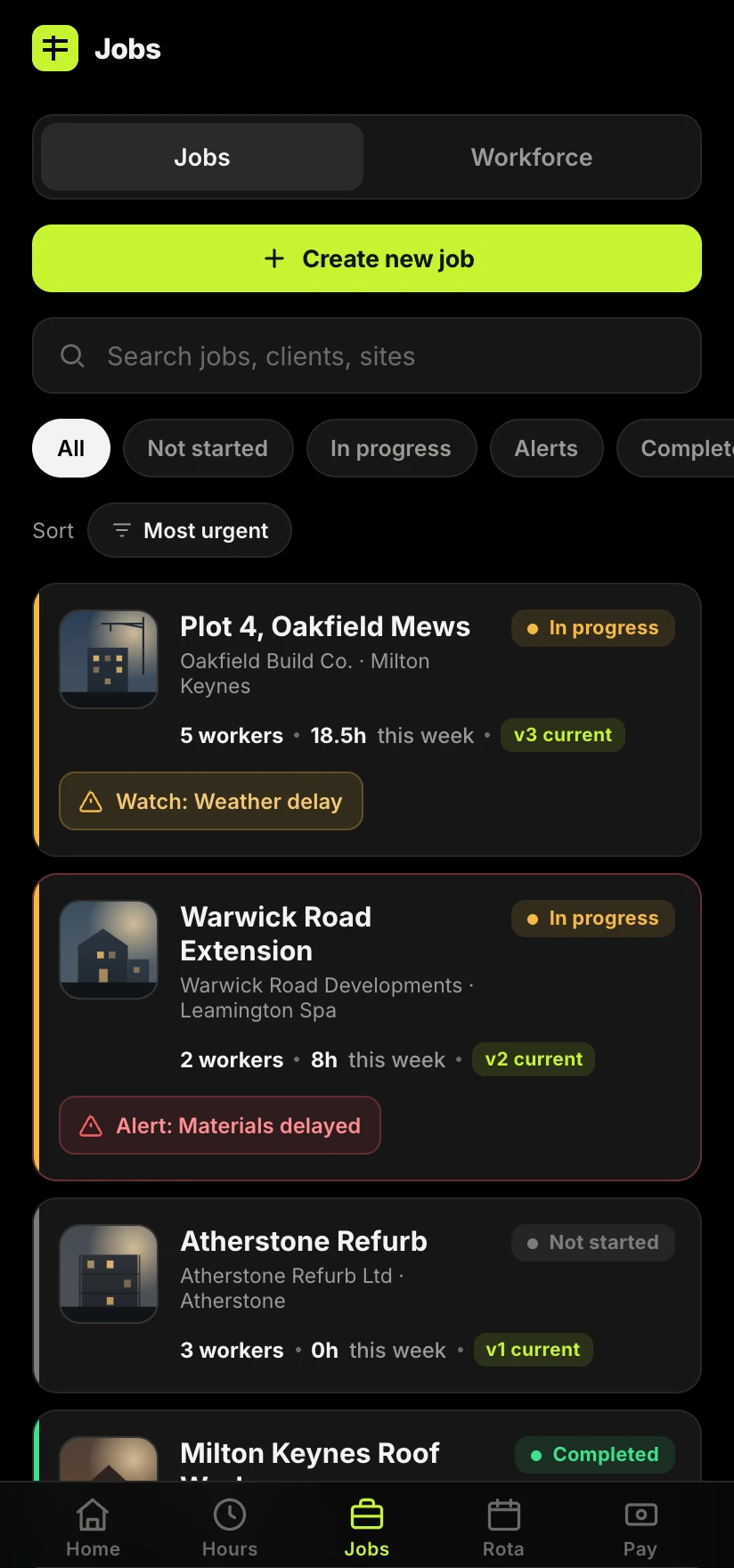
The one thing both routes share is that they run on good records. Sole trader or limited company, you still need your jobs, hours, invoices, CIS and expenses organised, and the bigger you get, the more that matters. The firms that find the switch painless are the ones whose books are already clean.
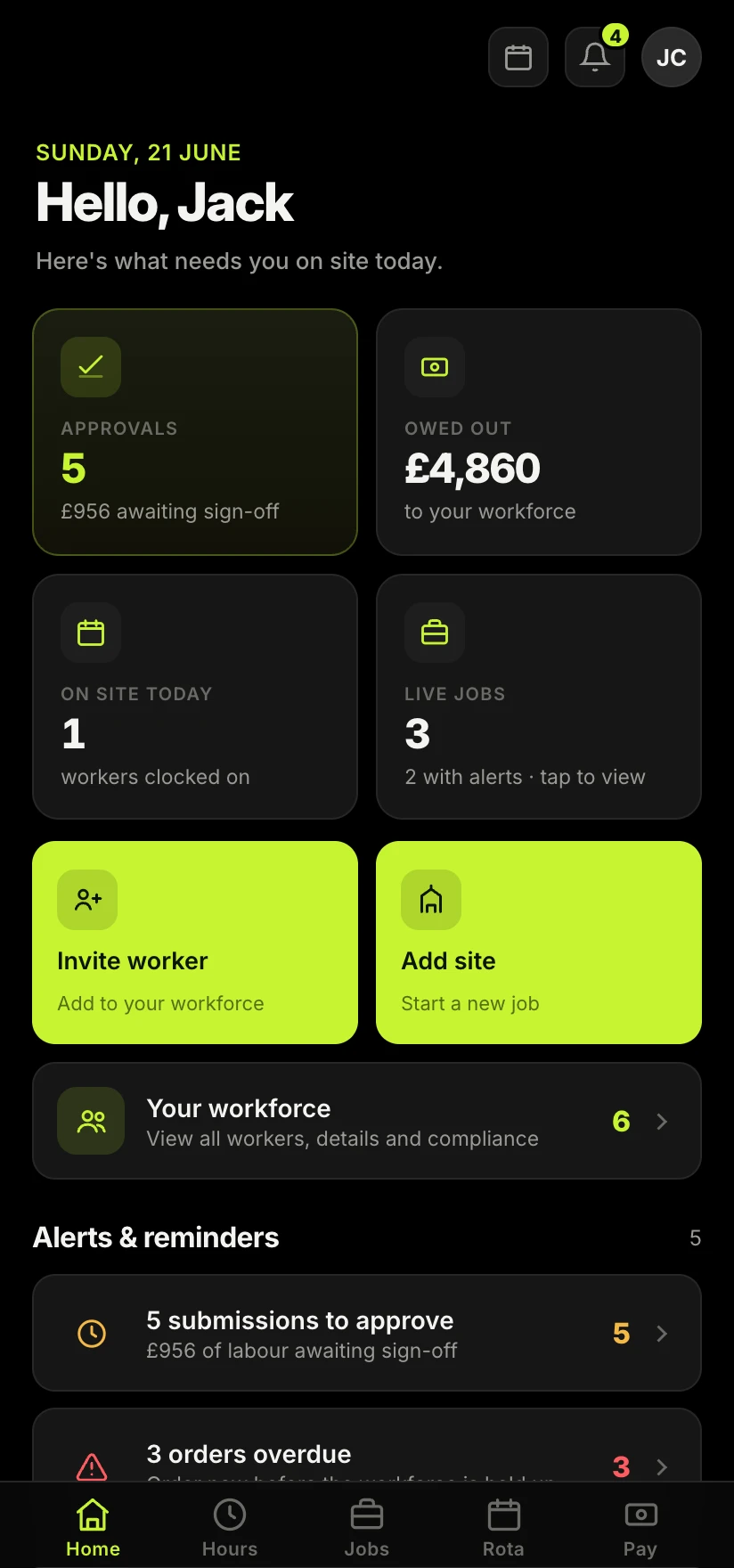
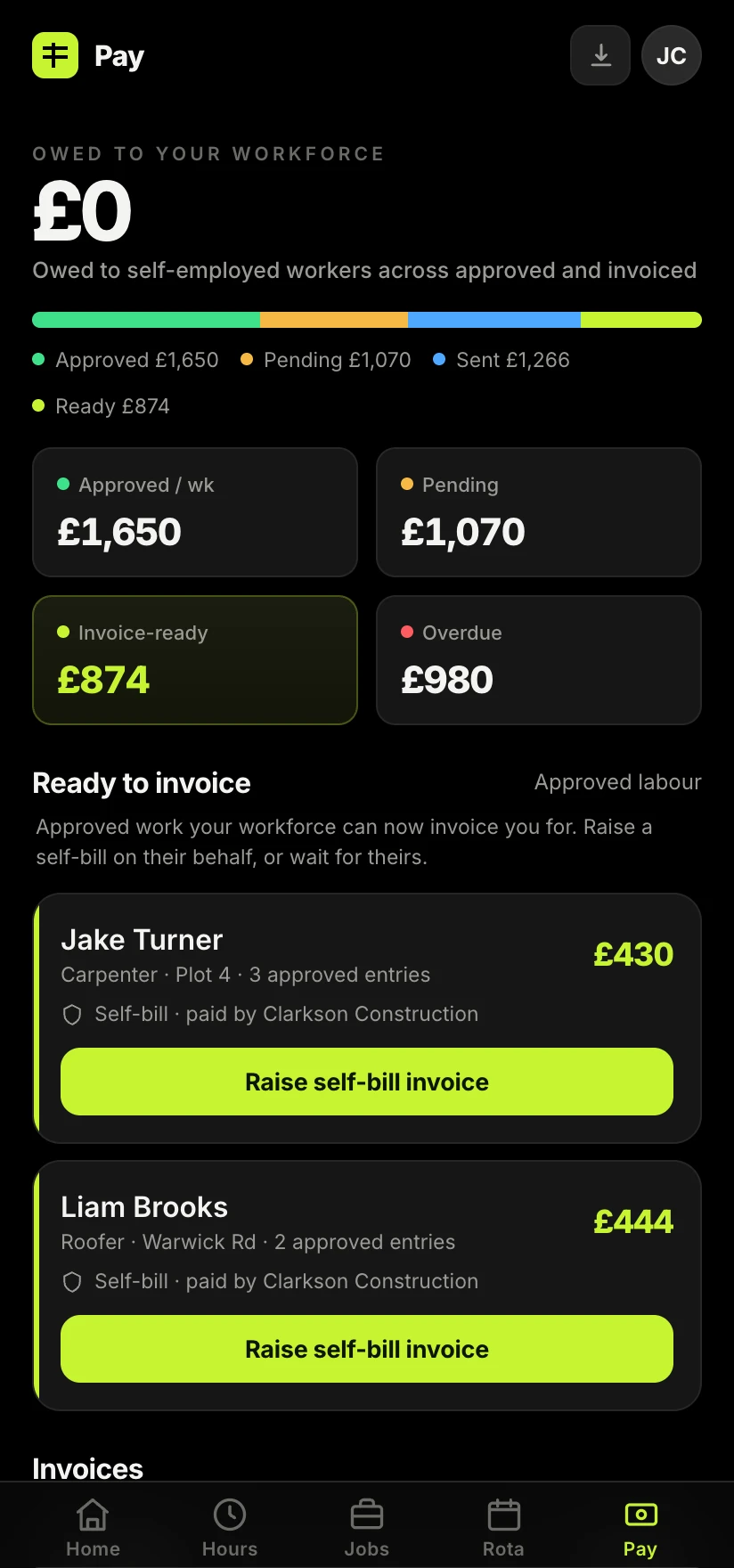
That is where Sitewise fits, whichever structure you are on: it keeps jobs, hours, invoices and CIS in one place as you work, so your records are always up to date and your accountant has what they need in minutes. Get the structure right with an accountant, keep the records tidy with Sitewise, and the business side stops being the part you dread. Our piece on the real cost of construction admin shows why that matters more than most trades realise.
Take the admin off your hands.
Whichever way you trade, Sitewise keeps jobs, hours, invoices and CIS in one place, so your records are clean and your accountant has what they need in minutes.
Join the Sitewise waitlistFree to join. Be first in when early access opens.
Frequently asked questions